The ERP Playbook for Indian Manufacturing and the Digital Bottleneck
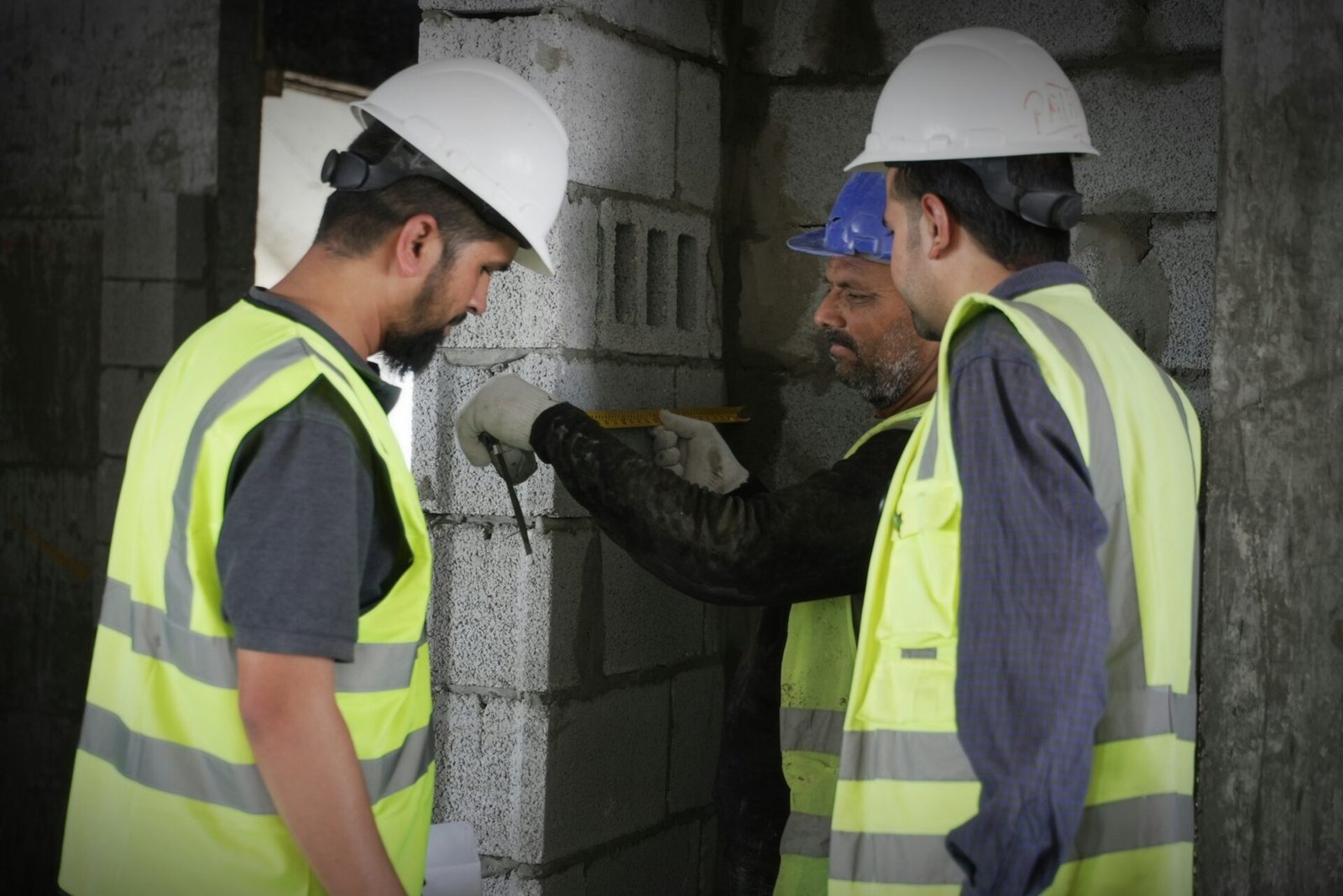
The landscape of Indian manufacturing is currently experiencing an unprecedented architectural shift. Driven by massive global supply chain realignments, geopolitical decoupling, and aggressive domestic policy frameworks, the sheer volume of production moving into the subcontinent is staggering. Facilities that were previously operating as secondary assembly nodes are now being rapidly upgraded to serve as primary global export hubs. The physical infrastructure on the ground is evolving at a breakneck pace, with massive investments pouring into advanced CNC machinery, expanded warehouse square footage, and highly skilled floor operators. This is the tangible realization of the Make in India initiative, pushing domestic production capabilities to a truly global standard.
However, a massive discrepancy exists between this physical expansion and the digital infrastructure required to manage it.
If you walk onto the floor of a rapidly scaling mid-market manufacturing plant today, you will see state-of-the-art physical machinery governed by completely broken digital systems. The facility might have a massive new production line, but the routing and scheduling for that line are being managed on a chaotic, deeply nested Excel spreadsheet. Procurement teams are guessing at raw material reorder points based on delayed data, while the finance department is entirely disconnected from the daily realities of the shop floor.
When your physical capacity scales faster than your digital architecture, the entire enterprise begins to buckle under its own weight. Revenue goes up, but profit margins completely evaporate due to hidden inefficiencies, expedited shipping costs for missing raw materials, and catastrophic quality control failures that slip through the cracks. The bottleneck is no longer how fast your machines can produce; the bottleneck is how fast your data can travel from the loading dock to the general ledger.
To survive this hyper-growth phase, Indian manufacturers must completely overhaul their digital foundation. They cannot rely on localized accounting software masquerading as enterprise systems, nor can they afford to stitch together a dozen disconnected applications. The scale required today demands a singular, unified digital spine that connects every single node of the manufacturing process in real-time.
The Monolith Trap and the Cost of Legacy Rigidity
For the past two decades, the standard response to this digital scaling problem was to purchase a legacy enterprise software monolith. Boardrooms would authorize massive capital expenditures to deploy deeply entrenched, rigidly coded ERP systems, operating under the assumption that a massive price tag automatically guaranteed operational excellence.
The reality for mid-market manufacturers has been entirely different. Legacy ERP platforms were engineered for a different era of business. They are fundamentally monolithic, meaning they force the organization to swallow an enormous, inflexible codebase all at once. Instead of the software bending to accommodate the unique, localized workflows of an Indian manufacturing plant, the plant is violently forced to alter its operational DNA to satisfy the software’s hardcoded logic.
This creates a terrifying hostage situation for the enterprise IT department. If a manufacturer wants to launch a highly customized new product line that requires a unique quality assurance workflow, they cannot simply configure the legacy system to handle it. They must submit a change request to an overseas vendor, pay an exorbitant consulting fee, and wait six months for a team of developers to write brittle, custom code that will inevitably break during the next forced system upgrade.
Furthermore, the licensing structures of these legacy systems actively punish growth. Every time a new floor manager or inventory clerk needs access to the system, the enterprise is hit with another massive licensing fee. This financial friction forces companies into terrible architectural workarounds, such as having five different warehouse employees share a single login credential. When multiple users share a login, the system completely loses its audit trail, destroying any hope of accurate accountability or forensic traceablity when a production error occurs.
Indian manufacturers can no longer afford to pay a ransom to maintain their own digital infrastructure. The agility required to compete in the modern global supply chain demands a departure from digital concrete.
Composable Architecture Enters the Shop Floor
The frustration with rigid monoliths is driving a massive architectural pivot across the Indian manufacturing sector. Forward-thinking Chief Information Officers and Plant Managers are rapidly abandoning legacy systems in favor of composable, modular architecture. This paradigm shift is exactly why Odoo has emerged as the definitive digital standard for the modern manufacturing enterprise.
Odoo fundamentally changes the physics of enterprise software. Built on a modern Python framework with a highly robust PostgreSQL database backend, the platform abandons the monolithic structure entirely. Instead, it operates as an ecosystem of distinct, highly interoperable applications. You have an app for Inventory, an app for Manufacturing Execution, an app for Quality Control, and an app for Core Financials.
Because all of these applications sit natively on top of the exact same underlying relational database, they share a unified data schema. There are no fragile point-to-point APIs connecting the inventory module to the accounting ledger. When a warehouse clerk scans a barcode to receive a pallet of raw steel, that single database mutation instantly updates the inventory valuation in the financial ledger, alerts the procurement team that the purchase order is fulfilled, and signals the manufacturing routing engine that the materials are now available for production.
This composable approach allows manufacturers to escape the nightmare of the “big bang” software rollout. You do not have to deploy a fifty-module behemoth on day one. A rapidly scaling facility can deploy the core financial ledger and basic inventory routing in the first quarter. Once that foundation is stabilized, they can seamlessly snap on the advanced manufacturing and product lifecycle management modules in the second quarter. The data models natively inherit the relationships, but the operational rollout is entirely decentralized and paced to match the organization’s actual absorption capacity. This is how you build a digital ecosystem that accelerates growth rather than restricting it.
Engineering Precision with Advanced Product Lifecycle Management
The complexity of modern manufacturing begins long before a machine is ever turned on. It begins in the engineering department, where intricate product designs must be translated into actionable, highly accurate manufacturing data. This translation layer is notoriously fragile. If an engineering team updates a CAD drawing but fails to update the corresponding data in the procurement system, the purchasing department will order tens of thousands of dollars of obsolete components.
Odoo resolves this disconnect by treating Product Lifecycle Management (PLM) as a native extension of the core ERP, rather than a disconnected third-party tool. The foundation of this system is the highly advanced, multi-level Bill of Materials (BOM) architecture.
A sophisticated manufacturer rarely builds a product from a simple list of raw materials. They build sub-assemblies, which are then fed into larger assemblies. Odoo allows engineering teams to construct deeply nested, multi-level BOMs that perfectly mirror the physical reality of the product. More importantly, it introduces the concept of the “Phantom BOM.” If a sub-assembly is never actually stocked in inventory but is simply built on the fly during the main production process, Odoo allows you to tag it as a Phantom. This tells the system to bypass unnecessary inventory routing steps and directly issue the raw materials to the final production line, drastically reducing software friction for the floor workers.
Beyond BOM structuring, the PLM module completely digitizes the Engineering Change Order (ECO) process. When a design flaw is detected or a material substitution is required, the engineering team initiates an ECO directly within Odoo. The system automatically routes the change request through a strict digital approval matrix. Once approved, the system instantly creates a new version of the BOM. It simultaneously alerts the procurement department to halt orders on the obsolete parts and updates the manufacturing execution system so that the floor operators instantly see the new instructions on their digital tablets. Total alignment, zero communication latency.
Dynamic Inventory Routing Across Complex Geographies
Logistics and inventory management within the Indian subcontinent present a unique set of challenges. Manufacturers frequently operate multiple facilities across different states, managing complex networks of primary production hubs, secondary assembly plants, and regional distribution warehouses. Tracking the movement of raw materials and finished goods across this fractured landscape using manual spreadsheets is a mathematical impossibility.
Odoo introduces a highly sophisticated, algorithmic approach to inventory routing that completely eliminates the guesswork from supply chain management. The system operates on a complex matrix of push and pull rules, which dictate exactly how materials should flow through your physical network based on real-time demand.
For example, if a massive sales order is confirmed in the CRM, Odoo’s procurement engine instantly analyzes the inventory levels across all connected warehouses. If the primary manufacturing plant does not have the required raw materials, but a secondary warehouse three states away has a surplus, the system will automatically generate an internal transfer routing order. It calculates the transit time and triggers the transfer exactly when needed so the materials arrive on the production floor just in time for assembly.
This level of dynamic routing extends down to the micro-level of the specific warehouse floor. Using advanced putaway rules, Odoo can direct forklift drivers to store highly volatile chemicals in a designated temperature-controlled zone, while simultaneously directing heavy steel components to reinforced ground-level racks. By removing the decision-making burden from the floor staff and replacing it with algorithmic routing logic, manufacturers can drastically increase their inventory turnover velocity while simultaneously shrinking their warehousing footprint.
Quality Assurance as a Native Protocol
In a high-velocity manufacturing environment, quality control cannot be treated as a reactive afterthought. If your inspectors are only checking for defects at the very end of the assembly line, you are already bleeding money. Every minute of machine time and every ounce of raw material invested into a defective product is permanently lost capital. Quality assurance must be fundamentally woven into the very fabric of the manufacturing process.
Odoo’s Quality module abandons the concept of the isolated inspection station. Instead, it allows quality engineers to embed mandatory Quality Control Points (QCPs) directly into the operational routing of the shop floor.
These control points can be triggered at any stage of the inventory lifecycle. When a vendor delivers a shipment of critical microchips, Odoo can automatically generate a mandatory receiving inspection. The warehouse clerk is physically blocked from moving the inventory into the active stockroom until a quality engineer logs into the system, performs a statistical sampling check, and digitally signs off on the batch.
This logic extends directly to the manufacturing work centers. You can configure Odoo to force a machine operator to use their digital caliper to measure the tolerance of a freshly cut steel component. The operator enters the exact measurement into their tablet. If the measurement falls outside the pre-defined statistical process control limits, Odoo instantly triggers an alert, halts the production order, and generates a non-conformance report. By catching deviations at the exact moment they occur, you prevent minor machining errors from cascading into massive, catastrophic batch failures.
Eradicating Unplanned Downtime via Embedded Maintenance
The single most expensive metric on any production floor is unplanned machine downtime. When a critical CNC router or a massive injection molding machine unexpectedly fails, the financial damage is not limited to the cost of the repair part. The entire production schedule is instantly bottlenecked. Downstream work centers sit idle while operators remain on the clock, and customer delivery commitments are shattered.
Legacy manufacturing operations attempt to manage this risk using disconnected maintenance logs or whiteboard schedules, reacting only when a machine begins making a strange noise. Odoo completely digitizes the maintenance lifecycle, shifting the enterprise from a reactive posture to a highly predictive, preventative methodology.
The system maintains a comprehensive digital twin of every single piece of equipment on the floor. It tracks the exact Mean Time Between Failures (MTBF) and the Mean Time To Repair (MTTR) for every machine. Based on this highly granular historical data, Odoo automatically generates preventative maintenance requests.
Crucially, because the maintenance module is natively connected to the manufacturing execution system, it possesses total contextual awareness. If the maintenance team schedules a mandatory bearing replacement for a specific conveyor belt, Odoo’s capacity planning engine instantly sees that the work center will be offline for four hours on a Tuesday. It algorithmically reroutes the pending manufacturing orders to alternative machines, ensuring that the preventative maintenance does not accidentally sabotage the weekly production quota.
The Financial Spine and Deep GST Localization
Ultimately, every single action on the manufacturing floor—every raw material purchased, every hour of machine time consumed, and every finished product shipped—must perfectly translate into financial data. If your ERP cannot capture the true, granular cost of production, your executive team is essentially flying blind, pricing products based on gut feeling rather than mathematical reality.
Odoo provides a highly robust, deeply integrated financial spine that captures costs at the micro-transactional level. It tracks standard costs, average costs, and real-time FIFO (First In, First Out) valuations. When a production order is completed, the system calculates the exact cost of the raw materials consumed, adds the fractional overhead of the machine time, and factors in the direct labor costs based on the operator’s actual time tracking. This provides the CFO with absolute, real-time visibility into the gross margin of every single product coming off the line.
For Indian manufacturers, this financial capability must be paired with extreme regulatory compliance. Operating within the subcontinent requires navigating one of the most complex indirect tax structures in the world. This is where localized configuration is critical. Odoo natively supports comprehensive Indian GST localization.
The system automatically calculates SGST, CGST, and IGST based on the deeply mapped HSN codes of the products and the geographic locations of the supply chain nodes. Furthermore, Odoo completely automates the e-invoicing and e-way bill generation process, connecting directly to the government’s IRP (Invoice Registration Portal) via API. When a massive shipment of finished goods leaves the loading dock, the truck driver already has the digitally signed e-way bill in hand, completely eliminating the manual administrative delays that historically plagued Indian logistics.
The Fallacy of Out-of-the-Box ERP and the Need for Expertise
Because Odoo boasts a beautiful, modern user interface and an accessible app-store model, there is a dangerous temptation among mid-market companies to attempt a DIY implementation. IT directors will spin up a cloud instance, click install on the manufacturing modules, and assume the software will magically optimize their business.
This approach almost always ends in a catastrophic operational failure.
Enterprise software is not plug-and-play. It is a highly complex relational database that requires deep, structural architectural planning. You cannot simply install Odoo; you must fundamentally engineer it to match the specific physical realities of your production floor.
This is exactly why engaging an elite odoo implementation partner india is a non-negotiable requirement for manufacturing scale. A tier-one consulting partner does not just configure software settings. They act as master architects. They spend weeks walking your physical shop floor, forensically analyzing how raw materials move, how operators interact with machines, and where the hidden data bottlenecks exist.
An expert partner understands the dangerous difference between configuration and customization. Inexperienced developers will immediately start writing custom Python code to force Odoo to perfectly mimic a manufacturer’s old, broken legacy processes. A true architectural partner will push back. They will force the business to abandon its outdated workflows and align with Odoo’s native, optimized logic, protecting the core codebase and ensuring that the system can seamlessly upgrade when the next major version is released.
Architecting the Digital Twin of the Shop Floor
The most critical phase of any manufacturing ERP implementation is the translation of physical reality into digital architecture. If the digital representation of your shop floor is inaccurate, every single algorithm, scheduling rule, and cost calculation in the system will be fundamentally compromised.
An expert implementation team begins by meticulously defining your Work Centers. A Work Center in Odoo is not just a label; it is a complex digital object that carries specific capacity constraints, efficiency tracking metrics, and cost formulas. The architects will map exactly how many hours a week a specific CNC machine can operate, the exact cost of the electricity it consumes per hour, and the specific skill level required by the human operator who runs it.
Once the Work Centers are perfectly defined, the architects map the Routing. Routing dictates the exact sequential path a product takes across the shop floor. If a steel casing must be cut at Work Center A, sanded at Work Center B, and painted at Work Center C, the routing logic ensures that Odoo strictly enforces this sequence.
This foundational architecture is what unlocks Odoo’s advanced capacity planning and Master Production Schedule (MPS) capabilities. Because the system knows exactly how much time each operation takes and exactly what capacity is available at each Work Center, it can look at a massive influx of confirmed sales orders and algorithmically schedule the production runs to maximize throughput while preventing crippling bottlenecks.
Bridging the Gap Between Machines and the Ledger
The most perfectly architected ERP system in the world is completely useless if the data feeding into it is delayed or inaccurate. In many manufacturing plants, the digital system and the physical machines exist in two entirely different universes. Operators write down their production numbers on pieces of paper, which are collected at the end of the shift and manually typed into the computer by an administrative clerk the next morning.
This manual data entry destroys real-time visibility and introduces massive human error. To achieve true scale, the shop floor must be digitally synchronized with the core ledger in real-time.
Odoo facilitates this synchronization by deeply supporting hardware integration. Elite implementation teams will deploy digital tablets at every single Work Center. Instead of a paper traveler document, the operator looks at a ruggedized screen that displays their exact manufacturing instructions, complete with embedded PDF schematics and safety warnings.
When the operator begins the job, they tap the screen. Odoo begins tracking the exact labor time. When they finish a batch, they scan a barcode, and the system instantly consumes the raw materials from digital inventory and registers the finished goods. For highly advanced facilities, architects can utilize Odoo’s IoT (Internet of Things) boxes to connect the software directly to the PLC (Programmable Logic Controller) of the machinery. When the machine physically ejects a finished component, the system registers the completion instantly, completely removing the human being from the data entry process.
The Phased Deployment Methodology
Replacing the central nervous system of a manufacturing plant is an incredibly high-risk operation. If you attempt a “big bang” cutover—shutting down the old system on Friday and trying to run the entire factory on the new system by Monday—you are inviting a massive operational crisis.
This is where the strategic methodology of an expert partner becomes critical. Leading firms providing erp implementation consulting india employ a highly disciplined, phased deployment strategy to mitigate risk and ensure business continuity.
As detailed in our comprehensive implementation guide, the process begins by isolating the financial spine. Phase one involves migrating the chart of accounts, configuring the localized tax engines, and stabilizing the core procurement and invoicing workflows. You do not touch the shop floor yet. You ensure that the money is moving correctly and the business can legally operate.
Phase two introduces the inventory routing and warehouse management. You digitize the loading docks, implement the barcode scanners, and ensure that raw materials are tracking perfectly.
Only in phase three do you activate the complex manufacturing execution and routing rules. By pacing the deployment, the consulting team ensures that each operational layer is perfectly stabilized before stacking additional complexity on top of it. This methodology drastically reduces the shock to the organization and guarantees a secure, zero-downtime transition.
Frontline Adoption and User Experience
A recurring tragedy in enterprise software deployments is that executives buy systems based on how beautiful the reporting dashboards look in the boardroom, completely ignoring how the software actually feels to use on the factory floor. If an ERP system requires a forklift driver to navigate through seven different dropdown menus just to log a location transfer, that driver will immediately abandon the software and go back to their clipboard.
System adoption is not a mandate; it is an engineering problem. You have to design an interface that is faster and easier to use than the manual workaround it replaces.
Odoo’s native architecture is incredibly clean, but a skilled implementation team takes this a step further by ruthlessly customizing the user experience for the frontline worker. They utilize Odoo’s Studio application to strip away unnecessary data fields on the mobile and tablet views. If an operator only needs to see three buttons to do their job, the interface is locked down to display only those three buttons.
By designing hyper-minimalist, context-aware screens for the shop floor, the barrier to entry is completely shattered. Operators do not need a week of classroom training to understand how to log their time or report a machine failure. The system becomes completely intuitive, driving organic adoption and ensuring that the data flowing up to the executive dashboards is hyper-accurate and completely free of manual friction.
Beyond Go-Live: Continuous System Evolution
The day an ERP system goes live is not the end of the digital transformation journey; it is simply the starting line. As a manufacturing company scales, its operational realities will constantly shift. They will open new facilities, acquire smaller competitors, and launch entirely new product lines that require fundamentally different supply chain logic.
If you treat your ERP as a static installation, it will begin decaying the moment you turn it on. To maintain the agility of the system, Indian manufacturers must shift from a project-based mindset to a continuous evolution model, engaging a dedicated odoo erp consultant india for ongoing Application Managed Services (AMS).
As we explore in our deep dive on zero-downtime data architecture, a dedicated AMS team acts as a permanent architectural guardian for your digital ecosystem. When the business needs to expand into a new state and set up a massive regional distribution center, the AMS team is already inside the system, configuring the new warehouse routing rules and localized tax jurisdictions before the physical building is even finished.
When the HR department realizes they need a better way to track the certifications of the specialized machine operators, the AMS team seamlessly snaps on the Odoo Employee and Appraisal modules, natively connecting the HR data directly to the capacity planning engine of the shop floor. Continuous evolution ensures that the software never becomes a bottleneck, but always acts as a catalyst for the next phase of corporate growth.
The Executive Roadmap to Scale
The Indian manufacturing sector is staring at a generational opportunity. The global demand for high-quality, scalable production capacity outside of traditional hubs is immense, and the macro-economic indicators heavily favor those organizations that can execute with precision.
However, you cannot capture this global demand if your internal operations are held together by digital duct tape. You cannot scale a supply chain when your procurement team is blind, and you cannot protect your margins when your quality control is reactive. The transition away from fractured, legacy software toward a unified, composable ERP architecture is no longer a luxury; it is a basic prerequisite for survival in the modern industrial landscape.
By embracing Odoo, manufacturers gain access to an incredibly powerful, scalable database that perfectly mirrors the physical realities of the shop floor. But unlocking that power requires deep, uncompromising architectural expertise. It requires a partner willing to challenge your broken processes, map your physical friction into digital workflows, and govern your data integrity with absolute discipline.
Are you ready to eradicate the digital bottlenecks on your production floor? Do not let another quarter pass while your teams fight against outdated legacy software and broken spreadsheets. MainStay’s elite architectural teams specialize in tearing down operational silos and building highly optimized, scalable Odoo environments for India’s fastest-growing manufacturers. Contact us today to schedule a forensic audit of your current digital supply chain, and discover exactly what it takes to build a unified enterprise spine.