
MainStay People Consulting provides the structural governance architecture and executive coaching required to reduce C-suite transition failures by over 70%. When an enterprise appoints a new executive or navigates a complex organizational transition, the board expects immediate institutional stability and accelerated growth. Yet, without a rigid operational framework, even the most highly vetted leaders fail to execute, not because they lack emotional intelligence, but because they lack structural clarity.
The corporate world has a fundamental misunderstanding of what executive succession actually requires. When a multi-national enterprise promotes a new Vice President of Operations or brings in an external Chief Human Resources Officer (CHRO), the transition is almost universally treated as a “soft skills” behavioral exercise. Millions of dollars are spent on global search firms to find a visionary leader. Once hired, that leader is immediately enrolled in generic executive coaching seminars focused on empathy, active listening, and “finding their authentic leadership voice.”
This approach is an expensive, systemic trap.
You can hire the most communicative, empathetic, and culturally aligned executive in the industry, but if their structural decision rights aren’t strictly mapped, their tenure will fracture the enterprise. If cross-departmental Service Level Agreements (SLAs) aren’t enforced, and if the new leader does not know how to systematically drive adoption across your enterprise HRMS or ERP, they will fail. The business will stall, shadow IT will rapidly expand, and your boardroom will be left wondering why their expensive new hire hasn’t delivered the promised ROI.
The Problem Behind the Promotion: The Behavioral Trap
Why do so many high-profile executive transitions end in quiet resignations or forced exits within the first 18 months? Because standard executive coaching fundamentally ignores the operational reality of running a matrixed, complex enterprise.
Traditional coaching assumes that leadership is purely interpersonal. It assumes that if a leader can simply communicate their vision clearly enough, the organization will naturally follow. This completely ignores the deep, entrenched, and often broken operational workflows that dictate how work actually gets done on the ground. When a new leader steps into a role, they inherit a chaotic web of localized spreadsheets, shadow payroll systems, manual workarounds, and undocumented legacy processes.
A behavioral coach will tell the new CHRO to hold “listening tours” and build consensus. But listening tours do not fix a master data architecture that forces the finance team to manually reconcile headcount every thirty days. Empathy does not solve the friction between a corporate headquarters using a tier-one HRMS and regional offices bypassing the system entirely because it misunderstands local compliance laws.
When new leaders are dropped into this environment without an operational blueprint, they immediately hit a wall of structural friction. They spend their first six months fighting internal fires, untangling legacy approval matrices, and negotiating basic access rights rather than executing their strategic mandate. This is a well-documented crisis; as Harvard Business Review has extensively researched regarding executive transitions, the overwhelming majority of leaders fail not because of a lack of strategic vision, but because they fundamentally misunderstand how to align their mandate with the deeply ingrained political and structural realities of the organization.
The MainStay Lens: Succession as an Architectural Mandate
At MainStay, we recognize that succession is not a feelings problem; it is a data, architecture, and governance problem. You cannot coach a leader to success if the system they are meant to lead is structurally compromised.
This is where MainStay People Consulting fundamentally shifts the paradigm of executive transition. Under the strategic advisory of Rajiv Misra, we treat executive succession as a critical governance mandate. Rajiv’s intervention serves as the ultimate “Hero” mechanism for institutional stability, bridging the massive, perilous gap between high-level boardroom strategy and on-the-ground operational execution.
Rajiv Misra does not operate as an external theorist handing over a binder of generic management philosophies. With a deep background in anchoring HR transformations for complex enterprises, Rajiv architects the exact permanent frameworks that drive predictable, long-term enterprise value. His approach recognizes that an executive’s ability to lead is inextricably tied to the operational infrastructure they command. If the system is broken, the leader is paralyzed.
Rajiv Misra and The “Human Handshake” Methodology
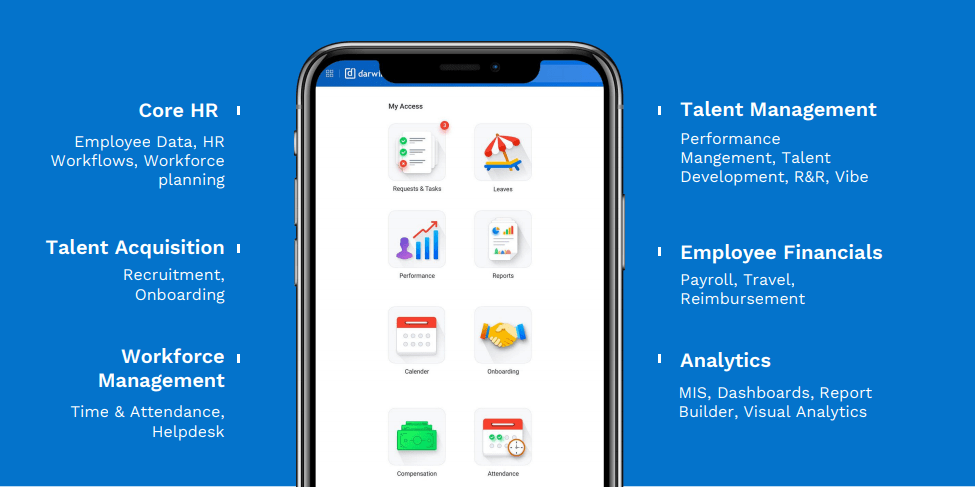
To ensure that newly appointed executives actually survive and scale their organizations, Rajiv Misra deploys our signature “Human Handshake” methodology. This is the critical intervention that bridges the gap between cold, digital enterprise transformation (like a Darwinbox or complex CRM rollout) and the human leadership required to guide an organization through it.
Through our specialized HR Advisory and Leadership Development engagements, we replace generic training with the Durable Governance Leadership Track. This is a productized, highly structured executive coaching package built specifically for C-suite transitions, M&A integrations, and post-go-live enterprise shifts.
Here is the exact structural playbook Rajiv and the MainStay team use to anchor executive succession:
- Mapping Ironclad Decision Rights Behavioral coaching tells a leader how to make a decision. Structural coaching defines exactly who has the authority to make it. When a new executive arrives, legacy managers will test the boundaries of their authority. Rajiv Misra’s intervention eliminates this ambiguity immediately. We map out strict, systemic decision rights, ensuring that approval matrices within your enterprise systems reflect the new leader’s actual on-the-ground authority, eliminating bottlenecks and bureaucratic friction.
- Architecting Sponsor Alignment An executive cannot drive digital transformation or systemic adoption simply by approving a budget and sending an email. Rajiv coaches project sponsors to become operational architects. We train executives on how to structurally enforce adoption rather than relying on forced compliance. This means tying departmental performance metrics directly to systemic workflows, ensuring that line managers cannot bypass the new leader’s operational mandates.
- Ritual Design and High-Velocity Reporting New executives often fall into the trap of retaining the old, slow weekly reporting meetings of their predecessors. Rajiv Misra intervenes by replacing these outdated rituals with high-velocity, data-driven reporting rhythms. We coach the executive on how to leverage their new HRMS or ERP platforms to create a single source of truth. When the CHRO and the CFO are looking at the exact same dashboard—because the master data architecture has been anchored correctly—decisions are made in minutes, not months.
- Enforcing Cross-Entity SLAs In a multinational enterprise, a new leader must navigate complex cross-departmental dependencies. Rajiv’s governance model engineers SLA (Service Level Agreement) enforcement directly into the executive’s daily workflow. If a regional office is failing to meet a compliance standard, it doesn’t result in a polite email; it triggers a systemic escalation. This level of rigorous execution discipline is what McKinsey identifies as a foundational pillar for successful organizational transitions, proving that structure heavily outweighs sentiment when driving enterprise change.
The ROI of Structural Succession
When executive coaching is repositioned as a governance problem under the guidance of Rajiv Misra, the ROI for the enterprise is immediate and highly measurable.
You no longer suffer through a 12-month “acclimation period” where the business stalls while the new leader figures out who owns what. Instead, you achieve rapid time-to-value. The new executive steps into a structurally sound environment where their mandate is supported by the system’s architecture. Data silos are broken down, shadow HR processes are eliminated, and the risk of the leader rejecting the enterprise—or the enterprise rejecting the leader—drops to near zero.
This is not just coaching. This is the deployment of a revenue and HR infrastructure that guarantees institutional stability, regardless of how fast your enterprise scales or how frequently your C-suite evolves.
Stop Renting Theory. Start Architecting Stability.
You cannot afford to leave your most critical leadership transitions to chance, and you cannot secure your enterprise’s future with generic behavioral workshops. If you are preparing for a major executive transition, integrating an acquired company, or trying to stabilize a fractured leadership team after a massive system go-live, you need an intervention built on execution discipline.
Do not wait for your new executives to drown in operational friction. If you are ready to secure your leadership transitions through the Durable Governance Leadership Track and experience the institutional stability that Rajiv Misra’s advisory provides, speak to an expert at MainStay People Consulting today. Stop treating succession as a soft skill, and start treating it as your most critical enterprise architecture.