The Go-Live Hangover and the need to shift AMS for Darwinbox
The deployment of an enterprise-grade Human Capital Management (HCM) system is an incredibly traumatic event for an organization. Executive steering committees spend eighteen months engaged in brutal vendor negotiations, exhaustive requirements gathering, and chaotic data migration sprints. When the launch date finally arrives and the entire workforce successfully logs into Darwinbox for the first time, a dangerous psychological shift occurs within the boardroom. The leadership team pops the champagne, declares the digital transformation a total success, and immediately reallocates the implementation budget to other IT projects. They treat the go-live date as the definitive finish line.
This assumption is not just slightly inaccurate; it is fundamentally destructive.
Enterprise software does not exist in a vacuum. It is a highly complex, deeply relational database that only generates return on investment when it perfectly mirrors the physical and operational reality of the business it serves. On the day of deployment, your Darwinbox instance is a pristine, mathematically perfect reflection of your company. But the very next morning, your company changes. A manager resigns. A new regional office opens in Pune. The finance department completely restructures the quarterly bonus payout matrix.
Your static software architecture instantly begins to diverge from your dynamic business reality. This divergence is exactly what enterprise architects call system decay. If you leave the platform unmanaged, assuming the initial configuration will magically scale with your headcount, the friction will rapidly compound. Employees will start encountering workflow errors. Managers will find that their approval routing is broken. The HR tech stack you just spent millions of dollars deploying will transition from an operational accelerator into a massive administrative anchor. Recognizing that go-live is merely the starting line is the first step toward protecting your digital investment.
Defining the Silent HR Tech Killer: Architectural Decay
The destruction of HR software ROI rarely happens through a massive, catastrophic server crash. It is far more insidious. The silent HR tech killer is architectural decay. It is the slow, grinding accumulation of minor technical misalignments that eventually paralyze the entire system.
Consider the intricate web of approval matrices hardcoded into your Darwinbox environment. During implementation, your consulting partner likely mapped out exactly who approves a mid-cycle promotion for a Level 3 engineer. It probably requires sign-off from the direct manager, the department head, and the regional HR director.
Six months later, your organization undergoes a minor restructuring. The “Department Head” role is eliminated and replaced by a “Matrix Operations Lead” who oversees three different overlapping project teams. The physical business adapts immediately. People start reporting to new bosses. But the underlying Darwinbox database architecture does not know the restructuring happened.
When a manager attempts to push a promotion through the system, the workflow engine hits a dead end. It is searching for a Department Head ID that no longer exists in the Active Directory. The digital paperwork freezes in purgatory. The manager gets frustrated, abandons the software, and emails a manual PDF approval directly to the payroll clerk.
This single event might seem trivial. But multiply that schema friction across twenty different modules—leave management, expense reimbursement, shift scheduling, and recruitment. Within a year, the entire system is choked with broken workflows and manual workarounds. The data integrity of the ledger completely collapses. Architectural decay silently dismantles your digital transformation from the inside out, leaving you with a highly expensive digital filing cabinet that nobody trusts.
The Danger of the Standard IT Helpdesk
When the friction of architectural decay begins to surface, the standard corporate response is to throw the problem over the wall to the internal IT helpdesk or a generic outsourced support vendor. This is a massive strategic error.
A traditional IT helpdesk is built entirely on a break-fix methodology. They operate a rigid ticketing system designed to resolve isolated incidents. If an employee locks themselves out of their account, the helpdesk resets the password. If a specific reporting dashboard refuses to load, the helpdesk clears the cache or reboots the application instance. They are trained to restore the system to its original baseline state.
But what happens when the baseline state is the actual problem?
If a regional sales director submits a ticket stating that the Darwinbox performance appraisal module is “too complicated” and is taking his team three hours per person to complete, the helpdesk is paralyzed. They cannot fix this. There is no software bug. The software is executing the exact 14-step review process it was programmed to execute. The failure is in the organizational design of the workflow itself.
You cannot ask a tier-one support analyst to rewrite complex relational database logic or re-engineer corporate HR policy. When you rely on a break-fix helpdesk to manage a tier-one platform like Darwinbox, you are completely stunting the evolution of the software. The system becomes rigid. Users learn to stop submitting tickets for structural friction because they know the helpdesk will just close the ticket with a note stating the software is “functioning as designed.” You are left paying premium licensing fees for a system that actively fights your employees every single day.
Unpacking the Reality of Application Managed Services
To combat this decay and unlock the true agility of the platform, Indian enterprises must completely abandon the helpdesk mentality and embrace a proactive architectural governance model. This requires securing dedicated darwinbox ams services.
Application Managed Services (AMS) is a fundamentally different operational paradigm. It is not support; it is continuous engineering. When you engage a specialized AMS partner, you are essentially grafting an elite team of enterprise architects directly onto your HR department. They do not wait for the system to break. They proactively hunt for friction.
An elite AMS team treats your Darwinbox instance as a living organism. They understand that the software must constantly mutate to survive the shifting demands of the business. If the executive team decides to completely overhaul the annual compensation strategy, introducing highly variable, performance-linked equity grants, the AMS team does not ask you to submit a ticket. They immediately clone your production environment into a secure sandbox.
Inside that sandbox, they completely re-architect the compensation module. They build the new mathematical formulas, map the complex equity vesting schedules, and tie the payout triggers directly to the performance management data points. They run massive algorithmic stress tests to ensure the new logic does not accidentally corrupt historical payroll data. Once the new architecture is mathematically bulletproof, they quietly deploy the update into the live production server over a weekend.
When the workforce logs in on Monday morning, the entire compensation structure has been flawlessly modernized. Zero downtime. Zero broken workflows. This is the definition of enterprise agility, and it is entirely impossible to achieve without a dedicated, highly technical AMS infrastructure continuously governing the database.
The DPDP Act and the Demand for Continuous Compliance
The regulatory landscape in India has become incredibly hostile to static IT environments. The enforcement of the Digital Personal Data Protection (DPDP) Act has permanently altered the risk calculus for any enterprise managing massive volumes of Human Capital data.
Compliance is no longer a legal checklist completed once a year; it is a real-time, transaction-by-transaction architectural requirement. As detailed by the Ministry of Electronics and Information Technology (MeitY), enterprises carry absolute fiduciary responsibility for securing employee Personally Identifiable Information (PII), governing strict consent rules, and executing the “Right to Erasure” upon demand.
If your Darwinbox architecture is static, you are a massive compliance liability.
Consider the Right to Erasure. If a former employee demands that their personal data be purged from your corporate records, how does your system handle it? In a static, poorly managed environment, an HR clerk clicks “Delete” on the user profile inside Darwinbox. The clerk assumes the company is compliant.
They are wrong. That employee’s PII is likely still lingering inside massive data payloads that were previously pushed via API to your downstream Active Directory, your external payroll vendor, and your legacy ERP system.
An advanced AMS team permanently solves this compliance nightmare by engineering automated, cascading data governance rules directly into the middleware. When the purge command is triggered in Darwinbox, the AMS architecture executes a highly synchronized digital strike. It fires webhook commands across your entire tech stack, algorithmically locating and scrubbing that specific employee’s PII from every single connected database in milliseconds. You do not achieve this level of forensic compliance by accident. It requires continuous, dedicated architectural oversight to ensure that your HR tech stack remains legally defensible.
Integration Atrophy and the Collapse of the Enterprise Spine
Darwinbox does not exist on an isolated island. It is the central nervous system of your corporate identity architecture. It must maintain perfect, real-time synchronization with your financial ERP, your IT provisioning systems, and your external benefit providers.
During the initial deployment, your implementation vendor likely built dozens of point-to-point API connections to weave these systems together. But APIs are notoriously brittle. They suffer from integration atrophy.
If your global ERP vendor pushes a mandatory security update that slightly alters the JSON schema for how it ingests cost-center data, your HRMS integration instantly snaps. The ERP API gateway will look at the incoming payload from Darwinbox, realize a single field is misaligned, and silently drop the data packet.
Your HR department will continue processing promotions and departmental transfers, assuming the data is flowing. Meanwhile, your finance department will run payroll based on outdated cost-center mappings, resulting in millions of rupees being incorrectly allocated across the general ledger.
This silent leakage is catastrophic. Managing it requires the exact type of proactive middleware governance we detail in our methodology on evaluating an HR tech consulting firm. A dedicated AMS team constantly monitors the API traffic. They utilize advanced error-logging telemetry to catch silent failures the exact millisecond they occur. If a downstream schema changes, the AMS architects instantly intercept the connection, rewrite the parsing logic inside the middleware, and force the queued payloads through before the financial reporting cycle is ever impacted.
Absorbing the Chaos of Mergers and Acquisitions
The true stress test of any HR tech architecture occurs during a merger or acquisition. When your enterprise acquires a 500-person competitor, the executive mandate is always identical: integrate the newly acquired workforce into the core Darwinbox instance immediately to realize operational synergies.
If you attempt this migration without an elite AMS team, you will completely paralyze your HR department.
The acquired company does not use your standardized job titles. They do not use your rigid compensation bands. They likely have a chaotic, highly localized web of legacy PTO accrual rules. If you attempt to force their messy, flat-file legacy data directly into your highly normalized Darwinbox database, you will trigger a massive schema collision that corrupts your core ledger.
A specialized AMS practice treats an acquisition as a high-risk surgical procedure. They isolate the incoming legacy data in a staging environment. They write complex transformation scripts that algorithmically translate the acquired company’s chaotic job architectures into your strict corporate hierarchy. They map the volatile legacy compensation structures into your standardized pay grades, ensuring that absolutely zero mathematical discrepancies impact the incoming employees’ first payroll run.
By utilizing AMS to execute the digital integration, the HR leadership is entirely freed from the technical chaos. They can focus purely on the cultural integration and change management, confident that the underlying database will securely absorb the massive influx of new human capital without a single dropped record.
Shadow IT and the Decay of Frontline Adoption
The most accurate metric for evaluating the health of an HRMS is not server uptime; it is front-line user adoption. If your employees and line managers are actively avoiding the system, the software has already failed.
When architectural decay makes Darwinbox workflows overly bureaucratic, users instantly seek the path of least resistance. If a regional manager needs to initiate a shift-swap for three of their factory workers, and the Darwinbox mobile app requires them to navigate six different screens and submit three separate approvals, they will not do it. They will open a WhatsApp group, organize the shift swap via text message, and log it on a piece of paper.
This is the resurrection of Shadow IT.
When Shadow IT takes over, the enterprise completely loses visibility into its own workforce. The official HR dashboard shows perfect compliance, while the actual factory floor is operating entirely off the grid.
An elite AMS team aggressively hunts down this friction. They do not blame the users for poor adoption; they blame the architecture. If telemetry shows that a specific regional team is abandoning the shift-swap module, the AMS architects instantly tear the workflow down. They strip out the unnecessary approval nodes, simplify the mobile UI, and deploy a frictionless, one-click solution. By continuously optimizing the user experience, AMS eradicates Shadow IT and forces the workforce back into the secure, governed ecosystem.
Leveraging Advanced Telemetry for Proactive Optimization
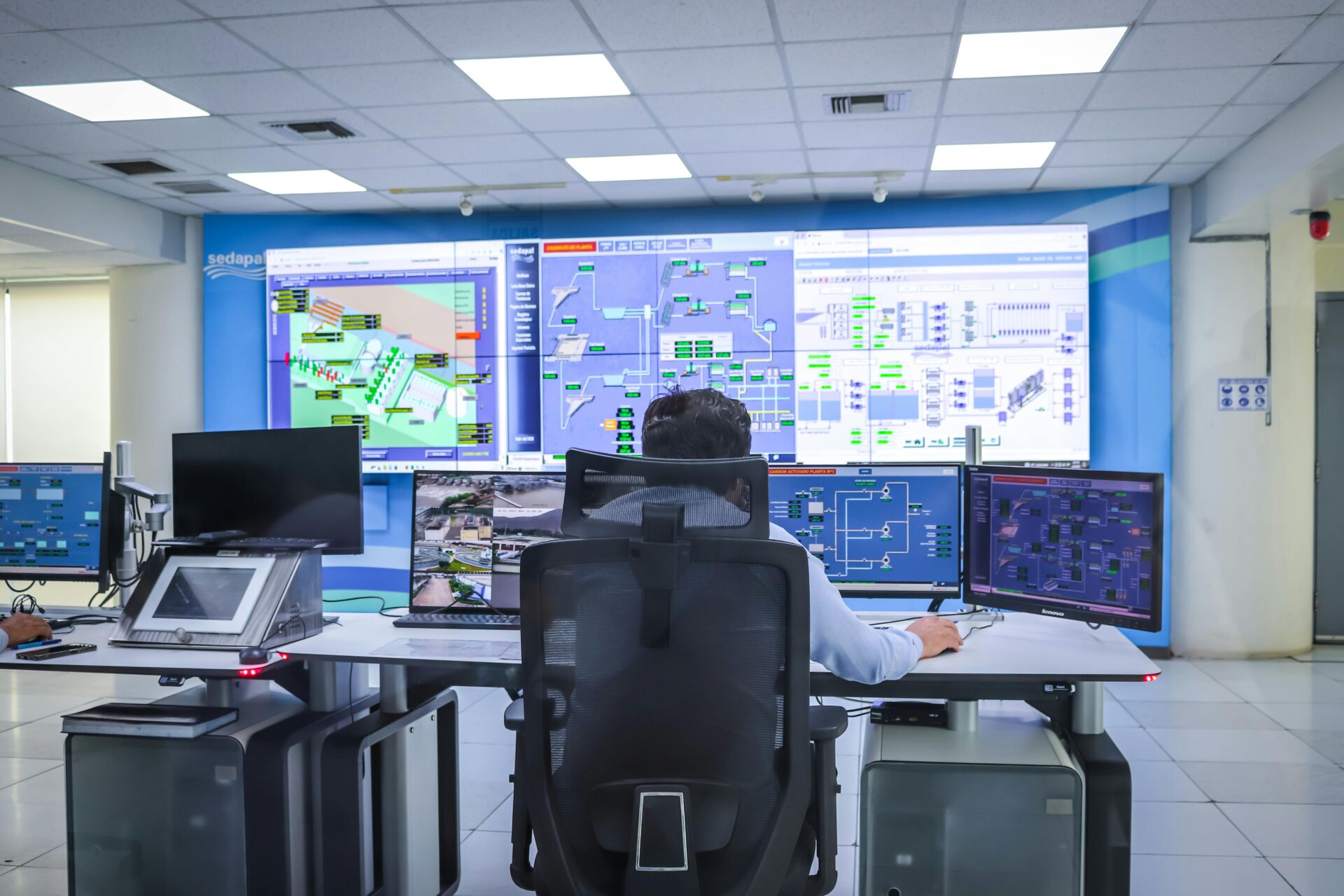
The transition from a reactive helpdesk to a proactive AMS partnership is entirely driven by data. Elite AMS providers do not sit around waiting for the phone to ring. They deploy advanced telemetry and user-behavior analytics to forensically monitor exactly how your workforce interacts with the software.
This level of architectural visibility is profound. The AMS team can track the exact millisecond load times of specific modules. They can generate heatmaps of where users are getting stuck during the digital onboarding process.
Imagine the telemetry reveals that 40% of all new hires are spending an average of 45 minutes on the localized tax declaration screen, and a significant portion are generating support tickets because they do not understand the required documentation.
A traditional IT model ignores this until it becomes a massive administrative bottleneck. A proactive AMS team intervenes immediately. They redesign the screen layout. They embed contextual, localized tooltips explaining exactly which tax documents are required. They streamline the upload process. The average time spent on the screen drops from 45 minutes to 4 minutes, completely eliminating the bottleneck and drastically accelerating the time-to-productivity for every new employee. This is how you weaponize software to drive operational velocity.
The True Cost of Technical Debt in Human Resources
Procurement departments frequently resist the shift to managed services because they only look at the immediate invoice. They compare the retainer cost of a specialized AMS team against the blended hourly rate of a generic outsourced support desk and conclude that AMS is too expensive.
This calculation completely ignores the catastrophic financial reality of technical debt.
When you allow architectural decay to compound, the business pays a massive, hidden tax every single day. Industry analysts track this closely, noting that poorly optimized HR systems drain thousands of hours of highly paid managerial time. If a poorly configured performance review matrix forces 500 senior directors to waste an extra two hours navigating clunky software, you have just burned 1,000 hours of executive capital.
Furthermore, when the system eventually breaks down so severely that it requires a massive “re-implementation” project three years later, the capital expenditure will dwarf whatever savings you achieved by using a cheap helpdesk.
Engaging a premier hr tech consulting firm for continuous AMS is an insurance policy against technical debt. By constantly paying off the micro-frictions and keeping the architecture perfectly aligned with the business, you prevent the massive, catastrophic system failures that destroy enterprise ROI. You are not paying for support; you are paying for sustained digital velocity.
Security Profiling and Zero-Trust Data Governance
In an enterprise environment, access to human capital data must be governed by absolute paranoia. You are housing highly sensitive compensation matrices, localized tax identifiers, and internal performance ratings.
During the initial rollout, the security architecture is usually fairly clean. The implementation team builds strict Role-Based Access Control (RBAC) profiles. But as the company scales, managers begin requesting exceptions. A project lead temporarily needs access to a different department’s compensation data to calculate a cross-functional budget. The IT helpdesk, eager to close the ticket, grants the project lead “Super Admin” privileges.
They forget to revoke it.
Within two years, your entire RBAC architecture is a chaotic mess of over-permissioned users. You have mid-level managers holding the digital keys to the entire executive compensation vault.
A dedicated AMS team enforces strict, zero-trust data governance. They constantly audit the security logs. They utilize automated scripts to ensure that user permissions dynamically adapt to the exact requirements of their current job title, and nothing more. If an employee transfers to a new department, the AMS architecture instantly revokes their legacy access rights and provisions their new permissions in real-time. By treating security as a continuous, programmatic discipline, you completely lock down the enterprise perimeter.
Continuous Talent Analytics and the Boardroom Mandate
The ultimate objective of any tier-one HRMS is not simply to process payroll; it is to provide the executive leadership team with predictive talent analytics. The boardroom needs to know exactly what the attrition rate is in the engineering department, how the new variable compensation model is impacting profit margins, and whether the enterprise has the specific skill sets required to execute a massive pivot next quarter.
If the underlying database architecture is decayed, the reports generated for the boardroom are nothing more than digital hallucinations.
You cannot run advanced predictive analytics on fragmented, corrupted data. Modern human capital strategy relies entirely on absolute data integrity.
This is the highest-level value proposition of an AMS partnership. By constantly repairing the schema friction, managing the API integrations, and enforcing strict data entry rules at the frontline, the AMS architects guarantee that the core ledger is mathematically flawless. When the CHRO pulls a real-time headcount forecast for a board meeting, they can present the data with absolute confidence, knowing that the underlying architecture has been continuously governed and rigorously audited.
The Critical Task of Vetting the Architectural Partner
Recognizing the need for continuous architectural governance is only the first step. The actual survival of your HR tech stack depends entirely on the caliber of the partner you select to execute it.
The Indian market is flooded with generic IT services firms claiming to offer managed services. If you hand your Darwinbox instance to a vendor whose primary competency is managing offshore call centers and providing basic laptop provisioning, you will fail.
You must engage a specialized darwinbox consulting services practice.
You need to vet them aggressively. Do not ask them about their Service Level Agreements (SLAs) for ticket response times. Ask them how they handle bidirectional webhooks during a massive organizational restructuring. Ask them how they manage schema friction when migrating fragmented legacy data during an acquisition. Ask them to demonstrate exactly how they write serverless automation scripts to bypass manual data entry on the factory floor.
You are hiring master architects to govern the central nervous system of your enterprise. You need a partner who will challenge your broken internal policies, push back against bad technical requests, and govern your architecture with absolute, uncompromising discipline.
The Blueprint for Sustained HR Agility
The era of the static enterprise software deployment is completely over. You can no longer buy a massive platform, configure it once, and expect it to survive the brutal, hyper-dynamic reality of the modern corporate landscape.
The silent HR tech killer is waiting inside every single unmanaged database. It feeds on minor organizational changes, API schema updates, and user frustration. It slowly strangles the agility of the business until the software completely collapses under its own technical debt.
Indian enterprises must transition away from the illusion of passive ownership. As we clearly define in our comprehensive strategies for post go-live continuity, the only way to protect your multi-million-dollar software investment is through continuous, proactive architectural evolution.
By shifting from a reactive helpdesk model to a dedicated, elite AMS partnership, you fundamentally change the trajectory of your digital transformation. You stop fighting the software, and you start weaponizing it. You lock down your compliance, eradicate manual workarounds, and ensure that your HR technology stack remains perfectly aligned with the speed, scale, and ambition of your enterprise.
Are you watching your HRMS ROI slowly evaporate into technical debt? Do not let architectural decay and reactive support models paralyze your human resources infrastructure. MainStay’s specialized Darwinbox AMS architects act as your continuous governance engine, repairing schema friction, optimizing user workflows, and securing your enterprise data against the chaos of scale. Contact us today to execute a forensic audit of your current HR tech architecture and discover exactly what it takes to unlock true digital agility.