When it comes to tailoring ERP for industry, Odoo is one of the smartest choices today. When a mid-to-large Indian enterprise decides to modernize its digital core, the conversation inevitably turns to Enterprise Resource Planning (ERP) software. In recent years, Odoo has emerged as the platform of choice for organizations scaling past 500 employees, largely displacing legacy systems like Tally and challenging monolithic giants like SAP. However, the exact reason Odoo is so popular—its open-source, highly modular architecture—is also the primary reason deployments fail.
Enterprise leaders often fall into the trap of viewing Odoo as an “out-of-the-box” solution. The reality is that Odoo is a framework. It is a highly sophisticated digital clay. If you implement the exact same Odoo configuration for a high-volume retail chain as you do for a heavy-machinery manufacturer, both businesses will experience catastrophic operational friction.
The manufacturing floor requires deep, relational tracking of components, labor, and machine capacity. The retail floor requires high-concurrency transaction processing, offline resilience, and omnichannel inventory syncing and hence the need towards tailoring ERP for Industry, arises.
As a verified Odoo implementation partner in India, we have architected ecosystems for both sides of the spectrum. This comprehensive blueprint breaks down the exact architectural differences between Odoo for Manufacturing and Odoo for Retail, demonstrating why industry-specific tailoring is the only path to a successful ERP rollout.
The Manufacturing Blueprint: Depth, Routing, and Traceability
In manufacturing, profitability is determined by fractional margins. A miscalculation in the Bill of Materials (BoM), a bottleneck at a specific work center, or a failure to track scrap rates can decimate a quarter’s revenue. Implementing Odoo for a manufacturing enterprise requires a deep focus on the Material Requirements Planning (MRP) modules.
Multi-Level Bill of Materials (BoM)
A generic ERP struggles with anything beyond a simple assembly kit. A tailored Odoo MRP deployment must handle complex, multi-level BoMs. For example, assembling an industrial pump requires an engine, which in turn requires a sub-assembly of valves, which requires raw steel. Odoo allows architects to build “Phantom BoMs” (for intermediate sub-assemblies that are never stocked but instantly consumed) and “Variant BoMs” (to handle customized client orders without creating a million unique SKUs). Configuring this logic correctly ensures that when a massive sales order is placed, the procurement engine automatically triggers purchase orders for raw materials at the exact deepest level of the BoM.
Work Center Routing and Capacity Planning
Manufacturing isn’t just about materials; it is about time and machine capacity. A tailored Odoo implementation maps the physical factory floor into the digital space. Every machine and assembly line is designated as a “Work Center” with an assigned Overall Equipment Effectiveness (OEE) score, labor cost, and operating schedule. When a manufacturing order is generated, Odoo’s routing engine calculates the Master Production Schedule (MPS). It reserves capacity at Work Center A before moving to Work Center B. If a machine breaks down, the production manager can digitally reroute the workflow in real-time. According to McKinsey & Company, digitizing floor-level capacity planning is the primary driver of Industry 4.0 efficiency gains, reducing machine downtime by up to 30%.
Subcontracting and Indian Statutory Compliance
In India, a significant portion of manufacturing involves “Job Work” or subcontracting. You send raw steel to a third-party vendor; they galvanize it and return the finished component. A generic software installation will treat this as a standard purchase. However, Indian GST law mandates specific compliance for job work, requiring the generation of specific Delivery Challans and strict tracking of input tax credits if the materials are not returned within 365 days. A specialized implementation configures Odoo’s Subcontracting module to natively generate these government-mandated documents, securing your supply chain compliance without manual ledger entries.
The Retail Blueprint: Concurrency, Omnichannel, and Speed
If manufacturing requires deep relational depth, retail requires blistering horizontal speed. In a retail environment spanning 50+ stores across multiple states, the ERP must handle thousands of simultaneous micro-transactions without a single millisecond of latency.
High-Concurrency Point of Sale (POS) Architecture
The most critical module for retail is the Point of Sale (POS). Odoo’s POS architecture is uniquely powerful because it operates as a smart client. Once the day’s session is opened, the POS interface runs directly in the browser’s local cache. This means if a retail store in a Tier-3 Indian city loses internet connectivity, the cashier can continue to scan barcodes, process cash transactions, and print receipts without interruption. The moment the connection is restored, Odoo seamlessly syncs the offline transactions back to the central server, updating the central inventory and financial ledgers. Configuring this offline-to-online sync is critical for preventing queue bottlenecks on the retail floor.
Omnichannel Inventory Synchronization
Modern Indian retail does not exist strictly in physical stores. Enterprises sell via brick-and-mortar, their own eCommerce websites, and marketplaces like Amazon or Flipkart. If these channels operate in silos, you will experience “Overselling”—where an online customer buys a product that was just purchased by a walk-in customer five minutes prior. Tailoring Odoo for retail involves leveraging CRM and ERP Implementation Services to build real-time API integrations across all sales channels. Odoo acts as the central inventory master. The moment a barcode is scanned at the physical checkout, the API instantly deducts that unit from the Shopify storefront, ensuring absolute omnichannel parity.
Dynamic Pricing and Loyalty Engines
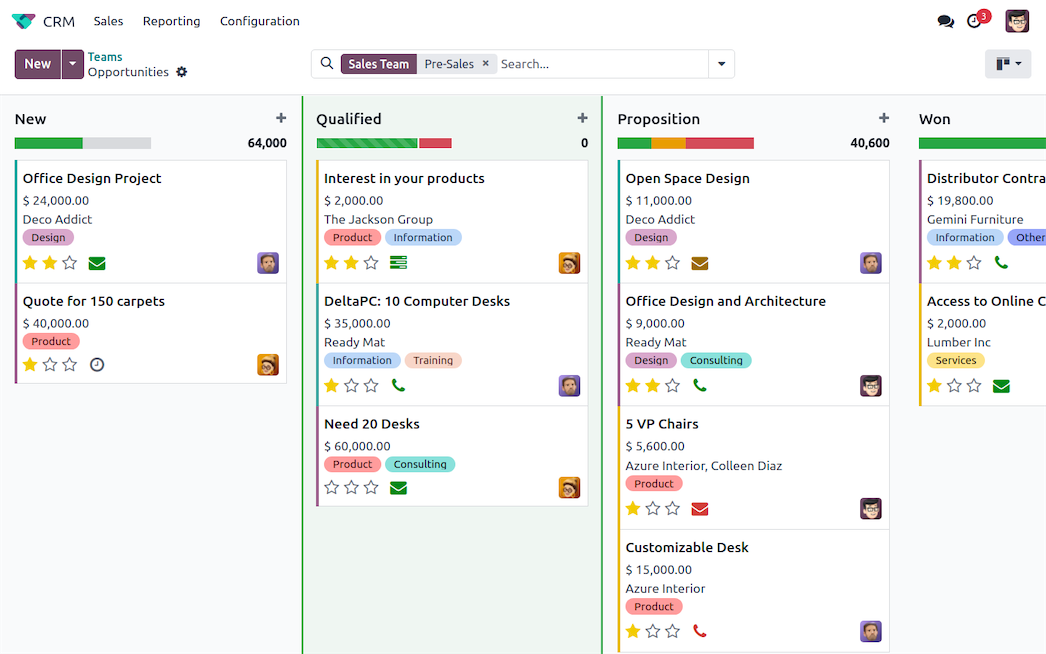
Retail margins rely heavily on promotions and customer retention. Odoo must be configured to handle complex pricing engines—such as “Buy One Get One” (BOGO) logic, seasonal markdowns, and tiered loyalty point systems. Furthermore, Odoo’s retail configuration integrates the POS directly with the internal CRM. When a customer provides their phone number at checkout, the cashier instantly sees their past purchase history, allowing for targeted upselling. This seamless transition of data from the store floor to the marketing department is the hallmark of a world-class retail architecture.
The Mandate for Architectural Tailoring
Whether you are tracking the lifecycle of heavy industrial equipment or scanning thousands of FMCG barcodes an hour, Odoo possesses the foundational code to run your business. However, raw code does not equal a business solution.
Many enterprises attempt to deploy Odoo using internal IT teams or generic Python developers. They install the modules, import the data, and assume the system will run. This invariably leads to massive technical debt. A manufacturer forced to use generic inventory workflows will lose track of scrap costs. A retailer bogged down by complex multi-step invoicing logic will suffer from massive checkout lines.
As detailed by global technology analysts at Gartner, the success of a modern ERP deployment is fundamentally tied to the industry-specific expertise of the integration partner. You need architects who have walked a factory floor and managed a retail stockroom.
Next Step: Architect Your Industry-Specific ERP Do not force your unique business operations into a generic software box. Build a digital core tailored exactly to your industry’s scale, speed, and compliance realities. Discover how we engineer high-performance systems for manufacturing and retail through our verified Odoo Implementation Partner Services